Detect sulfites in dried fruit with Indigo® test strips. Learn safe limits, why sulfites prevent browning, and how to test apples, mango, pineapple and more.
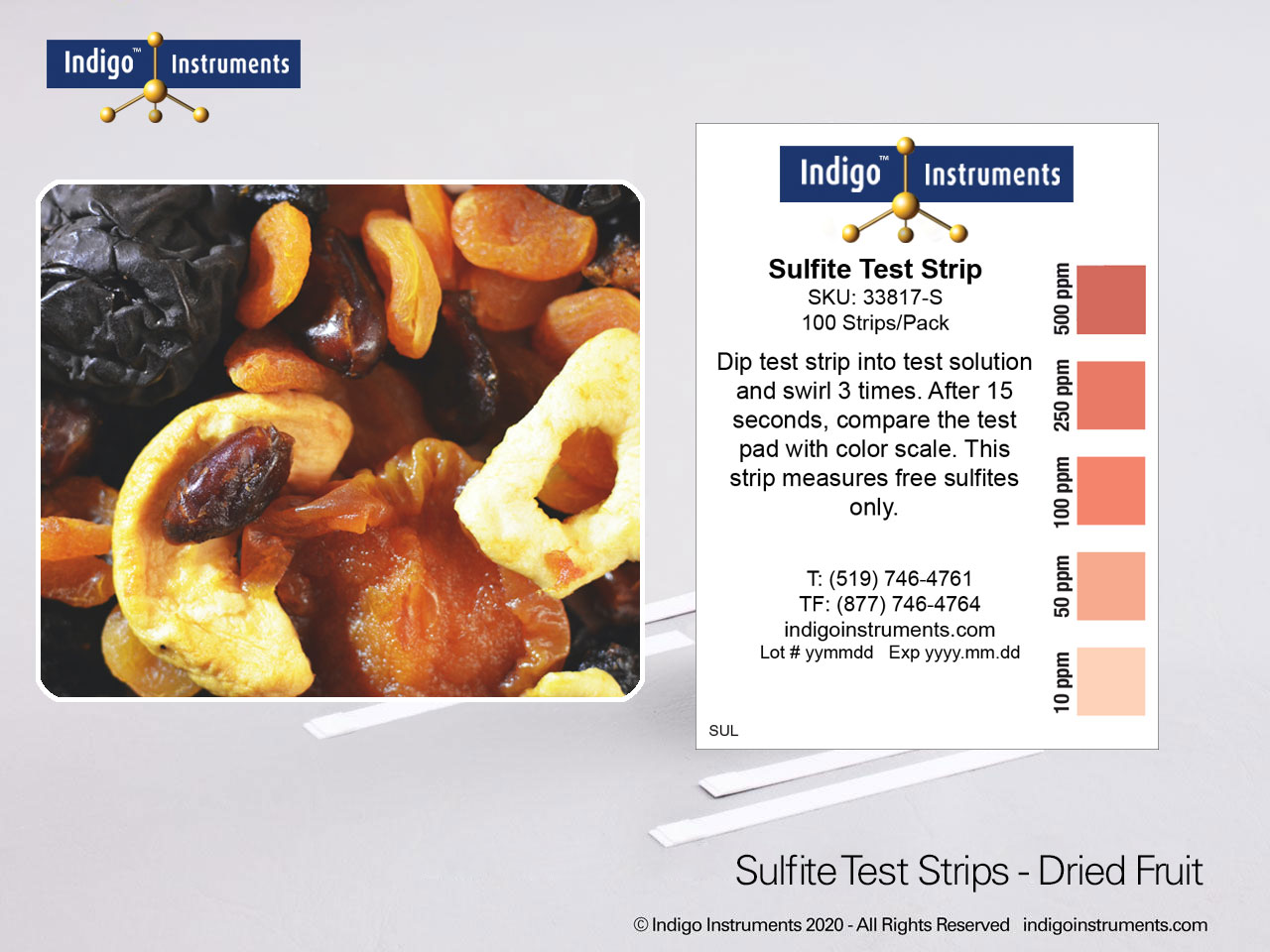
Sulfites are widely used to keep dried fruit looking fresh by preventing enzymatic browning. If you’ve ever noticed that some dried apples, mango, or pineapple appear bright and unblemished while others turn brown, it’s often due to a sulfite dip used during processing. Indigo® sulfite test strips detect 10-500 ppm sulfite residues directly on the surface of dried fruit, allowing processors, retailers, and consumers to verify whether sulfites are present.
Here's what one customer had to say: "...stunned by the accuracy...tested heavily sulfited dry fruit...was 10ppm and it was dead on." Read the full review on Google.
| Concept | Description | Activity | Learning Link |
|---|---|---|---|
| Sulfite Chemistry | Sulfites act as reducing agents that prevent enzymatic browning in fruit. | Compare sulfite-treated vs. untreated dried apple slices. | Food chemistry; antioxidant mechanisms. |
| Food Preservation | Use of sulfites as preservatives in commercial dried fruit production. | Measure sulfite levels in different brands of dried mango or pineapple. | Food processing, regulatory compliance. |
| Allergen Testing | Sulfites must be monitored due to asthma-related sensitivities. | Verify whether “sulfite-free” labeled products meet the 10 ppm limit. | Public health, consumer safety. |
| Analytical Technique | Colorimetric test strips provide rapid, semi-quantitative measurement. | Create a calibration series using known sulfite concentrations (10–500 ppm). | Analytical chemistry fundamentals. |
Because the sulfite preservative is only on the surface, you need to take the entire weight (mass) of the fruit into consideration. Read more in our blog on what the 10ppm level really means. For those interested in the chemistry of how these strips work, please refer to this pdf which explains the theory of how free sulfite is detected.
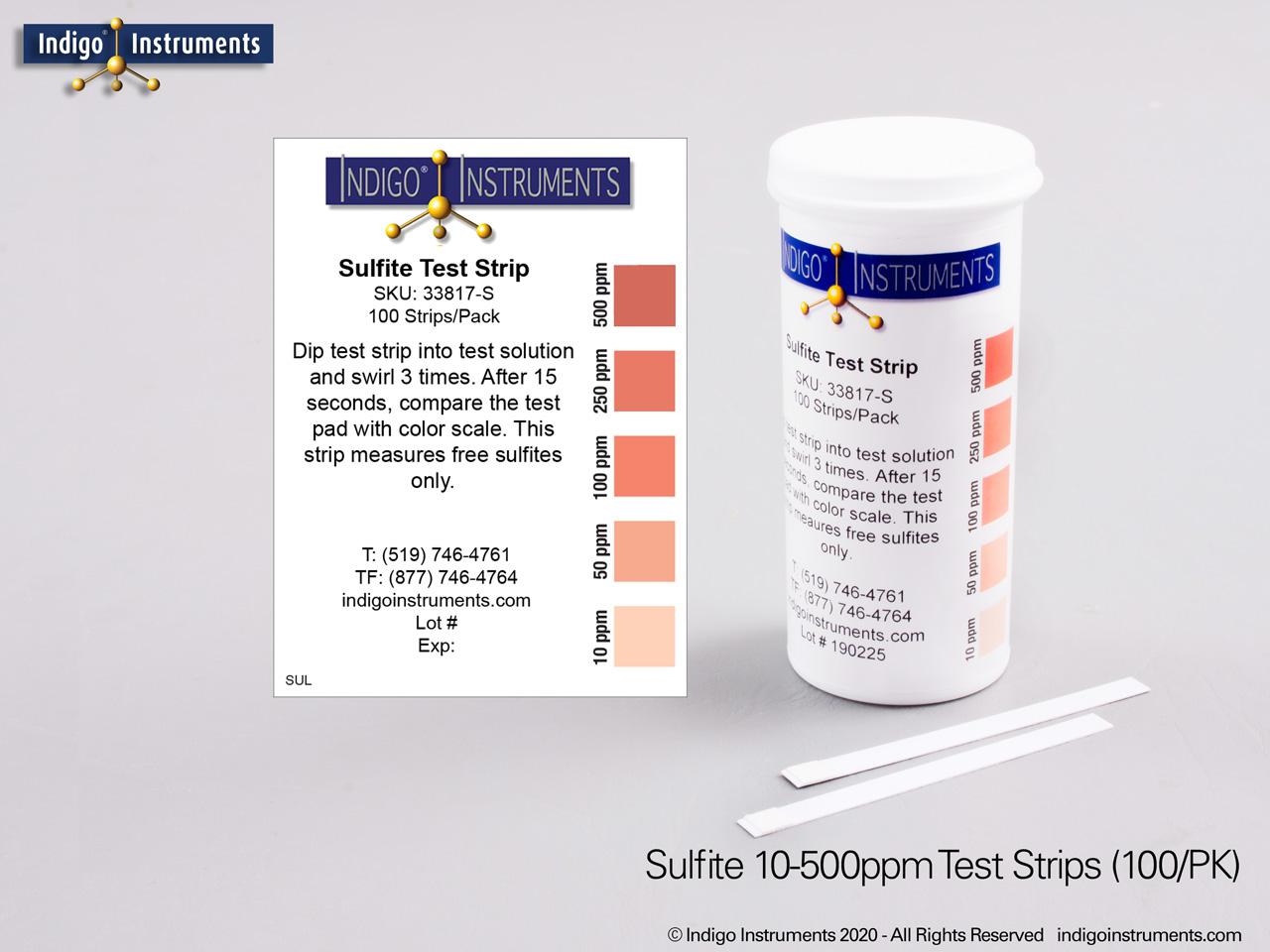
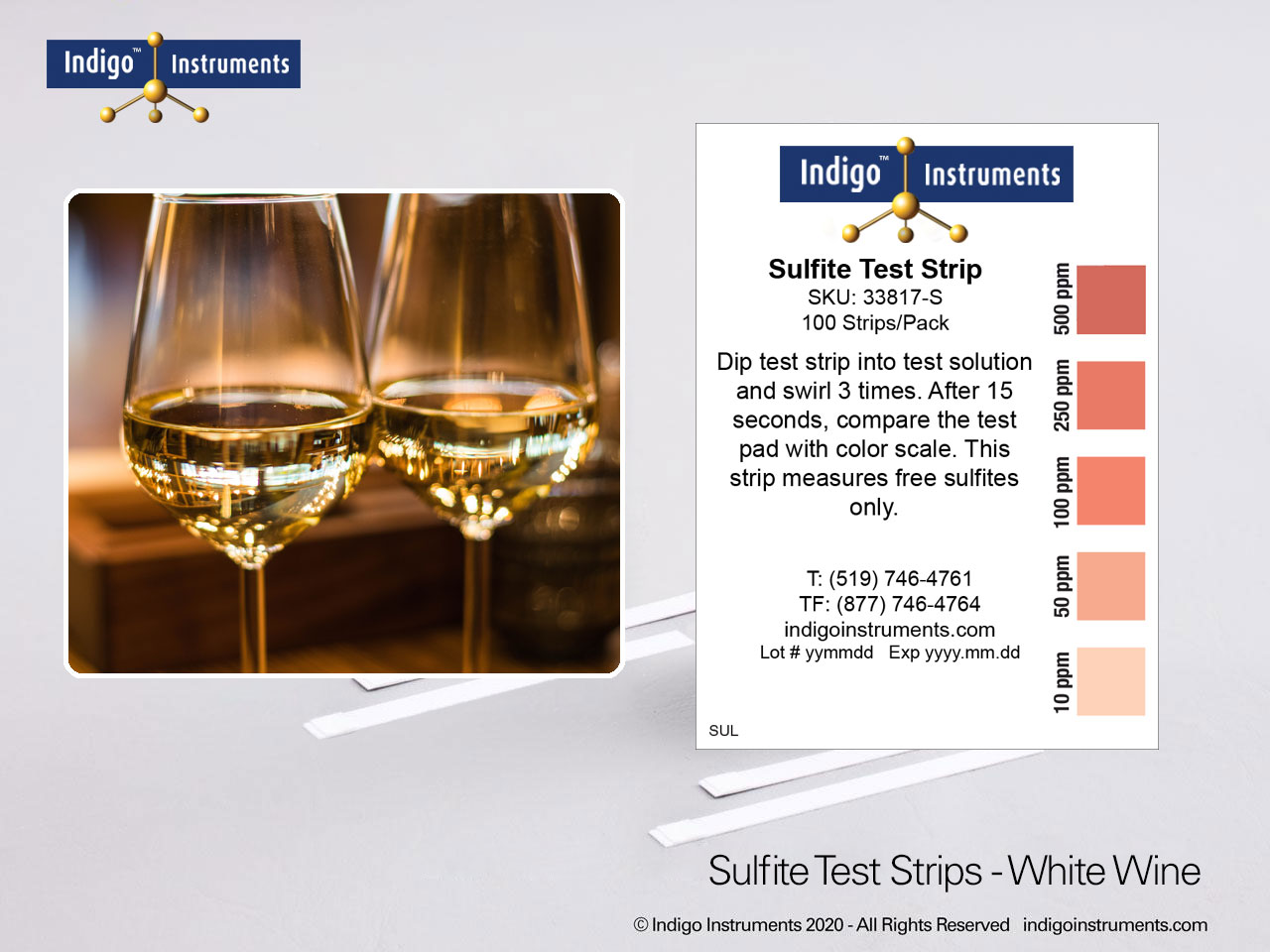
This Indigo® test strip indicates the presence of sulfite ion in increments of 10, 50, 100, 250, and 500ppm after 15 seconds.
Test strips worked as described, including the red wine citric acid method. I first did some comparisons using sulfites in water. Dipping the strips and the citric acid method gave the same result, albeit a little lower than expected. Solution was mixed to 100 ppm and both strips showed about 75. Used a similar technique on red wine, although dipping does not work. Wine with no sulfites showed zero. Added and got similar readings to the water results. Thanks for the great product and the citric acid trick.
Great place for a hard to find product. Excellent price! Quick shipping.
Thanks for letting us know. This might interest you since you are in quality control: Can 10ppm of Sulfite & Quat Really Mean Zero?